Friday, 7 May 2010

Dublin's Odd Museums


Ye Olde Hurdy Gurdy Museum of Vintage Radio

Taking its name from the nickname given to Radio Éireann by Seán Lemass, Ye Old Hurdy Gurdy Museum of Vintage Radio has been operating from Howth’s Martello Tower since 2003. With walls lined with posters and advertising signs, and floor space and cabinets crammed with radios and gramophones, curator Pat Herbert has built up quite a collection since he started in 1954. The tower itself has historic ties with the development of the hurdy gurdy, as radio pioneers Lee DeForest and Guglielmo Marconi both experimented from there in 1903 and 1905 respectively. Last Saturday (24th April) saw visitors trek to the tower for International Marconi Day, where the team operated Morse code all over the world to distant Marconi enthusiasts. Herbert tells us, “We’ve received messages from all over – Newfoundland, Russia and European countries.” The most recent item in the exhibit is a record player but the museum is looking forward too. “We cover everything from the wireless to the web; did you look up our website?” Herbert asks. We just might.

Ye Olde Hurdy Gurdy Museum of Vintage Radio, http://ei5em.110mb.com/museum.html. open May to October: 11am-5pm daily, November to April 11am -4pm (weekends only), admission €5


The National Wax Museum Plus

Somewhere out there, a glazed Tellytubby dressed up as Stalin shares a sofa with Hannibal Lecter who is dolled up in a Marylin Monroe wig. This is probably an idealistic scenario for the waxworks and costumes stolen from the original wax museum, but we live in hope. Having reopened last year in a new venue off College Green, the National Wax Museum Plus has replaced and expanded on the missing pieces. It now encompasses a history vault, writers’ rooms, sound studio, film and music legends, chamber of horrors, Irish legends and oh, Mr. Freeze is there too. We’re delighted the robbery didn’t send him to the cooler. Bewildered visitor Oisín O’Brion from Laois gave us his verdict as he was leaving, “It was an unnerving and surreal experience, a very odd mix. They’ll probably have a Jedward statue next.” Again, we live in hope.

The National Wax Museum Plus, 4 Foster Place, Dublin 2. waxmuseumplus.ie. Tel: 671 8373, admission €7 for children, €9 for adults. Students, teenagers & concession €9. Family Ticket: 2 Adults & 2 Children (under 12) €30


The Mobile Phone Museum

This venture received a great reception (wheeey…) when it opened in January this year. From 80s bricks to the iPhone, The Mobile Phone Museum is committed to the preservation of iconic mobiles. Curator Alan Donohue worked in the industry for years before combining private collections for public exhibit - with a little help from eBay. “We’ve got a good few pieces from there too. The most we’ve paid is £600 on the Motorola Dynatac, the world’s first mobile. It’s a big collector’s item”, Donohue explains. But his favourite phone of all time is the Nokia 6310i - “the sturdiest phone ever made, there’s nothing else like it.” The world’s smallest phone, the first Bluetooth, first phone watch and the first to vibrate are all behind glass, but if you ask nicely they might let you take a snap pretending to be Zac Morris or Gordon Gekko - which ever you fancy.

The Mobile Phone Museum, 6-7 Abbey Street, Dublin 2, mobilephonemuseum.ie, Tel: 8728722, free admission


The National Leprechaun Museum

With its 30lb crock of gold and a promise to take visitors to the heart of Irish identity, this Abbey Street venture faces a hard sell. The very mention of a National Leprechaun Museum induces scoffs and sniggers, but then anyone who’s ever been asked about their existence by non-natives can see some reasoning. Hell, why didn’t anyone think of this earlier? Concentrating more on folklore than paddywhackery, the museum combines interactive experience, such as making visitors feel a third of their size in a room of giant furniture, with more a traditional exhibition showing representations of leprechauns in pop culture. Some advice, be careful not to drop your souvenir leprechaun coin in the fare box on Dublin Bus. You will be gutted, and a sympathetic but resigned shrug from a bus driver won’t bring it back.

The National Leprechaun Museum, Abbey Street (Jervis Luas), Dublin 1. leprechaunmuseum.ie, admission €10 for adults, €7 for children/concession. Family Ticket: 2 adults & 2 children) €27. A €10 ticket includes a souvenir leprechaun coin which can be kept or redeemed in the museum shop/café to the value of €3


The Revenue Museum

Everyone has been more interested in the state’s revenue since, well, we ran out, but it’s still pretty hard to get excited about this museum. Opened by then Minister for Finance, Brian Cowen in 2007, The Revenue Museum sells itself as “a graphic and interactive exhibition of Tax and Customs collection, protection and accounting from the distant past to the present.” That makes it sound quite epic. While we admit we couldn’t muster up the enthusiasm to personally road test this museum, we were not helped by the unsociable opening hours Mon-Fri 10am - 4pm. With a lengthy break down of the role of revenue in the foundation of the state and pretty much every thing since, we’re imagining a kind of Reeling in the Years without the emotive music. We asked accountant Aidan Ryan from Tallaght what he thought of the museum, “I actually thought you were having a laugh, a revenue museum? Sounds made up. Never heard of it.” You couldn’t make it up.

The Revenue Museum, Chapel Crypt, Lower Yard, Dublin Castle, Dublin 2. revenue.ie, Tel: 8635 601


St. Michan’s Church

Although it’s not in the title (we’re bending the rules a bit here), the underground burial vaults of this Northside church is a mummy museum. It’s certainly a catchier and more descriptive name. For within the dry crypts of this inconspicuous church lie mummified remains, four of which are fully open for public viewing. By tip-toeing down a narrow stone stairway, you come to limestone tunnel with narrow coffin galleries on either side. In one alcove, casket lids are removed to reveal dried bodies with leathered skin covered in a thick film of dust. The tour guide will tell you the cadaver of ‘the crusader’ is meant to bring luck and to touch his finger, but there doesn’t seem to be anything too lucky about this scenario - considering he’s stuffed in an ill-fitting coffin with people prodding his corpse. Not for the fainted hearted.

St. Michan’s Church, 8 East Church Street, Dublin 3. Tel: 872 4154

Thursday, 29 April 2010

Little Shop That Could


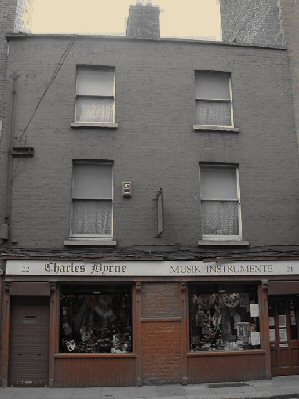
Charles Byrne Musik Instrumente has lived inconspicuously on Stephens Street for over a hundred years, but has less German history than the name suggests.


After stretching to press the door bell, we were let in and Charles Byrne himself told us about the beginnings of the shop, "The business started with my grandfather who got it in 1900 for repairing Egan Harps, so my family goes that far back connected with the music world."


Over the years the shop began selling instruments as well as repairing, until someone let fire to the building through the letterbox in 1992. His wife Maria told us, "It was a sad lost. But we were also very lucky. We could've been in the place working."


Geraldine, their daughter, added, "It was an opportunity as well. We had been here one hundred odd years and you do accumulate a lot of junk in that time. Since then there's been a lot of new things, a lot of changes. It rejuvenated the place as well."


Charles said, "After the fire Geraldine said she'd stay with us and help straighten things out. So I grabbed one arm and my wife grabbed the other and we says ‘You're in!’ and we have no regrets. She is excellent.”


You might expect a hundred year old shop to have a sort of dusty charm but Charles Byrne Musik Instrumente also have a website, blog and twitter.


On our visit, Peter Peterson from Washington State visited, “I came here for a low whistle. I've never seen them in a shop before."


But it's not only tourists that visit, Charles says, "I'm seeing grandchildren and great grand children of my first customers coming in so that shows ya I'm getting old. People make a special effort to shop here, that's how we're still in business."


"There's people who trust dad and wont go anywhere else,” beams Geraldine.


As we were leaving, being forced (ok maybe not ‘forced) to take a sweet and a calender, a German tourist inquires about the name, Charles tells her with a wink that he added the name for a laugh with a German supplier.

Tuesday, 20 April 2010

Patrick Kelleher - Album Review

Setting out to transform an electro-folk album into pure electronica is a brave venture. Particularly when you’re setting out to transform a record as well received as this one. It’s safe to say that Patrick Kelleher’s debut album You Look Cold was enthusiastically praised across the board. His layered approach in combining genres created something quite strange and yet quite beautiful. But less than a year since the original comes the cheekily titled You Look Colder – the remixes. Sequels to greats are often set up to fail but thankfully, You Look Colder is more Godfather II then The Matrix Reloaded. Phew.

Skinny Wolves kick things off with their stab at ‘He has to Sleep Sometime’, which is re-skinned as robotic dance punk you can pogo to. Thread Pulls ‘Finds You’ remix follows, starting out on the minimalistic side of the things only to build momentum with soft then intensified tribal drumming. David Kitt puts on his producing hat for ‘Not Leaving Town’ which at first maintains the haunting tone of the original, before morphing into a lighter, upbeat dance track. The other well-known producer on board is Jape, whose motorik beats establish themselves before relinquishing to an unexpected trance breakdown. Also featuring remixes by Toymonger, Catscars, The Booklovers, Hulk, Fucktotem, Legion of Two and School Tour, You Look Colder varies from mainstream dancey choons to industrial, avant-garde, orchestral, playful and even cinematic tracks.

A diverse experiment that really shouldn’t work but really does, You Look Colder is interesting as a companion piece to the original but can also stand by itself. The brain child of Patrick Henry from Osaka Records, the talents from very different electronic offshoots are pooled together for one mad record. More of this please Dublin.

Friday, 9 April 2010

Dave Clarke - Album Review

Words cannot describe the confusion and horror when the first few bars of Dave Clarke’s album There Was a Girl kicked in. This wasn’t the Baron of Techno, this was the stuff of acoustic nightmares. Er, there’s been a bit of a mix up…

There isn’t much musical crossover between techno Dave and his soft rock alter ego, but it still remains a highly confusing affair – even iTunes has techno Dave’s biography listed under soft rock Dave’s picture. All we know is what we can tell from the album cover; he’s bearded, he likes to wear oversized shades, he likes sitting in cars and, according to Amazon, his album is manufactured on demand using CD-R recordable media. He cuts a mysterious figure.

Opening with the album’s title track, ‘There was a Girl’ eases us in to the lax pace of the record, albeit with eerie howling. From this introduction we learn that soft rock Dave likes to rhyme. A lot. And he showcases his rigid rhyming skills throughout the album, here’s a sample from track two; “running to hide, running to stay alive/running to keep still/running up a hill” and so on and so forth. This is just a tiny taster of what is an entire album of forced nonsensical couplets.

After that one meanders to a silence, a live track begins with a civil crowd clapping for ‘Paintings on the Wall’. If you never thought acoustic could be proper sleazy, think again and listen here; “bang bang/yes I like it/bang bang all the way together”. The monotonous strum of guitar is violated by the filth that comes out of soft Dave’s mouth. This is pretty much as exciting as the album gets. Aside from a country twinge to ‘Wake Up’ and the brief bizarre ’80s synth intros to ‘The Escape’ and ode to sending an email ‘Lonely Days’, There Was a Girl plods along track-to-track with a faint acoustic guitar strumming mindlessly in the background, while soft Dave moans into the mic. It’s all pretty uninspiring.

Admittedly we got off on the wrong foot, so an external examiner listened to soft Dave to give There was a Girl a fair hearing. After a few tracks they turned and said, “This sounds like something Hugh Grant would’ve wrote in that film Music and Lyrics, doesn’t it?” Sums it up really. Stick to the original Dave Clarke is the recommendation.

Thursday, 8 April 2010

Urban Picnic - Restaurant Review

Starved workers have long migrated to the various establishments in and around George's Street Arcade for quick lunchtime eats. Certainly at The Dubliner, we've never been shy about our penchant of our weekly pilgrimage for a Sloppy Joe, but there is a new(ish) dog in town.

Urban Picnic resides in the space formerly occupied by The Bagel Bar with a menu that emphasises flavours from the Mediterranean, Asia and the Americas. On our visit, we were greeted by cheery staff and considering the weather (horrid as usual), I ordered soup of the day (tomato and basil) with brown bread (€4.95), while my companion had a roasted vegetable and spinach wrap with pesto mayo (€5.75).

The seating is communal benches, which I'm a fan of but it is an arrangement that can be divisive - a suit at the end of the bench with his newspaper spread out seemed happy with the extra space. The food arrived quickly, the soup was pulpy, the bread was very lightly toasted, the roasted veg were crunchy and the dressing was delish. On our way out, Chef Vinny asked us for honest feedback, we were able to say we'd definitely be back.

Urban Picnic, 30 Market Arcade, South Great Georges Street, Dublin 2

Wednesday, 31 March 2010

Somewhere Over The Rainbow - Behind The Scenes at the National Leprechaun Museum


Two balding heads peered curiously beneath the shutters which were lowered to half mast, “What’s going here, huh? What are you doing with our building?” The two men, who used to work in the old Fás offices, start to laugh when they are told they are on the site of the National Leprechaun Museum. "No really, it is", a museum employee insisted. "You’re pulling our legs," the civil servants shot back. After some to and fro, the men were finally convinced of the reality and walked away laughing with a promise to return.

Their reactions, while amusing, are not uncommon. It is most peoples’ first response after hearing a leprechaun museum is opening in Dublin, people instinctively question whether it will pander and perpetuate ludicrous assumptions of Ireland. You know those assumptions we assumed had died - until we saw Leap Year and it was confirmed that crazy Oirish characters are alive and well, and still make phone calls from fifties-style telephone booths rather than mobile phones.

In arranging a visit to the museum, the owner Tom O’Rahilly explained the reasoning behind the museum, “Irish culture is famous the world over – even Walt Disney came to Ireland to look for leprechauns. However, not many know the real stories behind the country’s folklore. We want to take visitors to the heart of Irish identity and imagination, telling the amazing tales that make up Celtic culture and offering some surprises and new experiences along the way."

Perhaps sensing our disbelief we were told that Dáithí Ó hÓgáin, Emeritus Professor of the Dept. Folklore at UCD, acted as the leprechaun consultant for the new venture and that the museum is rooted in folklore. The first room is a traditional museum information room and sets leprechauns in context in terms of popular culture. O’Rahilly guided us, “References to leprechauns date from the early texts of the 8th century, right through to Finian’s Rainbow, Darby O’Gill and The Simpsons. This room places leprechauns in early literature and follows them right through to modern times.”

Next up, we were ushered through an Alice in Wonderland-esque tunnel which plays with perception, leaving you a little disorientated. Beginning at the start of the tunnel, visitors appear larger and larger until they reach the end, which incidentally leaves them at the next room – ‘The Giants Causeway’. Beautifully crafted in wood, walking beneath this causeway is bizarre, but not as bizarre as the next room. ‘The Giant’s House’ lets visitors experience what it is like to be a third the size of humans, in a room with giant chairs, a table, cups and a fireplace. It’s pretty strange and again, messes with proportions and perspective.

O’Rahilly talked us through the remaining chapters; the bronze-clad ‘Inside the Fairy Hill’ is particularly interesting. He explained, “The Neolithic sites are very important in the history of mythology, these sites were home to the mythical beings of Ireland. We’re going to take you inside the fairy hill. We’re going to take you inside those sites and what we imagine they were like.”

Concentrating more so on folklore and Irish history, the leprechaun museum aims to use experience and feeling to tell stories - it even boasts an almost touchable 30lb crock of gold. It is unavoidable that The Leprechaun Museum will be sniggered at. But if you manage to get past the preconceptions , you might find a museum rooted in folklore, rather than paddywhackery.

Two pieces of advice for visitors; it’s pretty disorientating so recall that swimming advice and don’t visit until at least one hour after eating. Also don’t drop your souvenir coin in the fare box on Dublin Bus. You will be devastated.

The National Leprechaun Museum is situated right at the Jervis Street Luas stop.

Admission: €10 for adults, €7 for children/concession, family entry (two adults, two children) €27. A €10 ticket includes a souvenir leprechaun coin which can be kept or redeemed in the museum shop/café to the value of €3. See more at: www.leprechaunmuseum.ie

La Caverna - Restaurant Review


From the raving word of mouth recommendations that seem to emanate from La Caverna in Temple Bar, you’d be expecting simple and authentic Italian dishes created with fresh, high-quality ingredients. You might also expect friendly service, some nice décor and a pleasant atmosphere. Expect to have these expectations crushed.

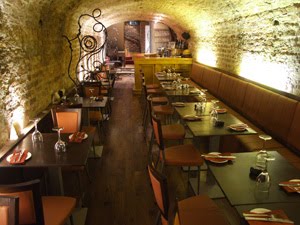
From our arrival we were disappointed. We were hoping to be seated in the wine cellar dining area, the barrel vault from which the name derives, but were shooed into the street level dining area. The waitress absconded before we could inquire about the cellar dining. Seated in a mini booth at a tiny table, we surveyed our surroundings - the menstrual red carpet, uncomfortable pine canteen chairs and generic art work all generated a sense of unease. The ABBA music oozing from hidden speakers added a bit of sparkle to the drab surroundings, but not enough to lift it from depressville.

Left with tatty menus, we surveyed the options. There are apparently specials, but these were not advertised on blackboards and not given by our waitress. No specials or anything special to be found on the menu either – potato skins, chicken wings, garlic mushrooms, burgers, chicken curry, ‘Italian’ omelette all feature, alongside the usual pizza and pasta dishes. It is a menu of overpriced pub grub - €19.95 for battered cod and chips (!). Our soft drink and glass of house white arrived at the table, neither chilled. Not wanting to linger, we decided to just get mains and get out.

My companion had a simple Margheritta [sic] pizza (€9.95), which looked like it was steam rolled out of the oven to our table. Nothing to write home about - although the tomato sauce had an unexpected zing to it, which is good if you like spicy, but not so good if you were expecting a plain ole pizza. I ordered two starters; the large Calarmi rings (€6.95) were over-cooked, rendering them rubbery and served with out-of-the-bottle sweet chilli sauce, which was an odd combination. The Brie Salad (€6.95) involved a giant wedge of brie with a side salad of iceberg lettuce, cucumber, pepper and three olives. The accompanying home-made cranberry sauce was overbearing and completely smothered the over-cooked brie, which managed to have a chewy coating. Truly awful. I had to nick a pizza slice from my companion to rid the taste.

After waiting an age for the bill, we grabbed our scrunched up coats from the side of our chairs (no cloak room and no backs of chairs to hang your on) and made a swift exit. An awful dining experience. Dissmissive staff (although a very smiley Maitre d’/manager), drab surroundings and a menu seemingly thrown together with no pretence of Italian. How places like this thrive and great Italian’s like Café Piedescalso on Thomas Street had to close is beyond me. It you don’t like Italian and want over-priced pub grub, you might enjoy a trip to La Caverna.

La Caverna, 12 Fownes Street, Temple Bar, Dublin 2. 01 6703110, www.lacaverna.info